Rocky Mountain TCM
Acupuncture · TCM Dermatology
Siddha Varma Therapy
Rocky Mountain TCM
Acupuncture · TCM Dermatology
Siddha Varma Therapy
CHINESE MEDIACL DERMATOLOGY
Your Psoriasis Is Unique. Your
Treatment Should Be Too.
If you have spent years managing plaques, scaling, itching, and recurring flares, you may be looking for more than another one-size-fits-all recommendation. Discover how specialized Chinese Medical Dermatology evaluates your individual psoriasis history and builds a treatment plan around your specific presentation.
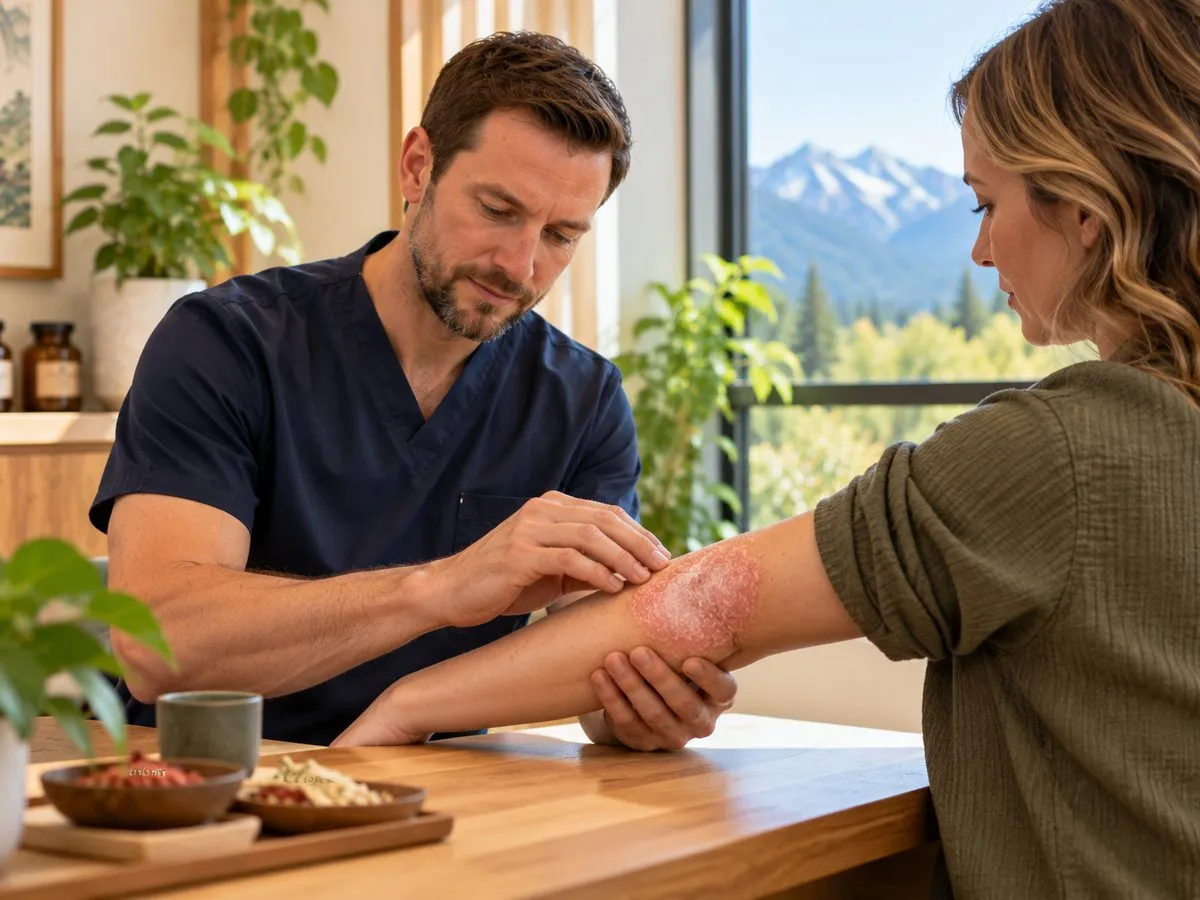
Why individualized care matters
Two people can have psoriasis and need very different treatment strategies.
We look at the appearance and location of your psoriasis, your history of flares, previous treatments, and your overall health. These details help us differentiate your Chinese Medicine pattern and decide what deserves attention not simply repeat a standard protocol.
Focus 01
Immune signaling
Psoriasis is an immune-mediated disease associated with inflammatory signaling and accelerated skin-cell production. We document the presentation and course of your condition.
Plaque thickness, scale, and redness
Onset and recurrence patterns
Nail changes and joint symptoms
Focus 02
Skin turnover and barrier
Rapid skin-cell turnover produces characteristic scaling. Cracking, dryness, irritation, and skin care practices also influence comfort.
Scaling and fissuring
Affected body areas
Topical products and skin care
Focus 03
Triggers and medical history
Psoriasis may flare following infections, skin injury, stress, or certain medications. We review potential associations without assuming a single root cause.
Infection and medication history
Skin injury and flare patterns
Dietary and digestive history when relevant
01. Immune Activity
Immune activity
We examine flare patterns, sensitivity, inflammation, reactivity, and the way the immune system may be contributing to repeated skin symptoms.
When and how flares begin
Patterns of redness, heat, itching, and weeping
Possible triggers and immune stressors
02. Skin Barrier
Skin barrier function
We review dryness, cracking, weeping, topical products, bathing habits, infection tendency, and the skin’s ability to retain moisture and repair itself.
Dryness, cracking, and water loss
Topical products and bathing habits
Recurring irritation or infection patterns
03. Microbiome
Microbiome and digestion
Digestive symptoms, food reactions, recurrent infections, antibiotic history, and microbiome concerns may help explain why eczema remains difficult to control.
Bloating, stool patterns, and food reactions
Antibiotic and infection history
When functional testing may be useful
04. Stress physiology
Stress physiology and recovery
Sleep quality, daily stress, nervous-system strain, and recovery capacity may affect inflammation, itching, and the ability to heal between flares.
Sleep and overnight recovery
Stress-linked flare patterns
Daily rhythms and nervous-system load
Focus 04
Recovery and joint health
Sleep disruption, discomfort, and stress can affect quality of life. Joint symptoms are also important because psoriasis may occur alongside psoriatic arthritis.
Sleep and daily functioning
Stress and symptom patterns
Joint pain, swelling, or stiffness
Psoriasis presentations
Psoriasis does not look the same in every patient.
Different forms of psoriasis have distinct appearances, distributions, and triggers. Identifying your presentation helps shape an appropriate treatment strategy.
Plaque Psoriasis
Raised, well-defined inflamed plaques with silvery or white scale, often on elbows, knees, trunk, or scalp.
Thickness and scale
Itching, fissuring, and discomfort
Recurrent plaques
Guttate Psoriasis
Numerous small, drop-shaped lesions that can appear suddenly, sometimes following a streptococcal infection.
Acute onset
Recent infection history
Widespread small lesions
Scalp Psoriasis
Inflamed, scaling patches along the scalp and hairline, sometimes extending behind the ears or onto the neck.
Persistent scale
Itching and irritation
Hairline involvement
Eczema
Care for acute, chronic, dry, weeping, infected, and treatment-resistant presentations across different ages and body regions.
Atopic dermatitis
Dyshidrotic eczema
Nummular eczema
Contact dermatitis
Seborrheic dermatitis
Hand and foot eczema
Head and neck eczema
Pediatric eczema
Psoriasis
Pattern-based treatment for inflammatory scaling, redness, thick plaques, itching, and recurrence.
Plaque psoriasis
Guttate psoriasis
Inverse psoriasis
Scalp psoriasis
Palmoplantar psoriasis
Nail psoriasis
Perioral Dermatitis
Care aimed at reducing inflammation, reactivity, papules, burning, and recurring irritation around the mouth, nose, and eyes.
Perioral presentations
Perinasal involvement
Periocular involvement
Recurrent steroid-associated flares
Rosacea
Individualized support for vascular reactivity, persistent redness, burning, pustules, flushing, and sensitivity.
Erythematotelangiectatic rosacea
Papulopustular rosacea
Phymatous rosacea
Ocular rosacea
Cystic Acne
Treatment for deep, painful, inflamed breakouts with attention to hormonal patterns, digestion, heat, dampness, stress, and inflammation.
Nodulocystic acne
Hormonal acne
Jawline acne
Inflammatory facial acne
Chest and back acne
Integrative Evaluation
Functional medicine is used selectively as an adjunct to Chinese Medicine when deeper investigation is clinically useful.
GI-MAP stool testing
Organic Acids Testing
Mycotoxin testing when indicated
Nutrition and microbiome review
Topical and skin-barrier strategy
Inverse Psoriasis
Smooth, inflamed patches in skin folds, where friction and moisture can make symptoms particularly uncomfortable.
Underarms and groin
Under-breast or other folds
Minimal visible scale
Palmoplantar & Nail Psoriasis
Involvement of palms, soles, or nails can interfere with daily activities and may require careful clinical distinction from other conditions.
Cracking and thickened skin
Nail pitting or separation
Functional discomfort
Psoriatic Arthritis Awareness
Some people with psoriasis also develop inflammatory joint disease. Joint pain, swelling, morning stiffness, or swollen digits warrant medical assessment.
Joint and tendon symptoms
Morning stiffness
Coordination with rheumatology
Is this approach right for you?
For people who want their psoriasis treated as an individual case.
You may be a good fit if you have lived with recurring plaques or flares, tried several treatments, or want to understand whether Chinese herbal medicine can play a role in your care. Our process involves detailed assessment, ongoing communication, and time to evaluate and adjust treatment— not a guaranteed quick fix.
Inflammation & lesion pattern
Evaluated in the context of your history and overall presentation.
Digestive and microbiome factors
Evaluated in the context of your history and overall presentation.
Stress, sleep & nervous system
Evaluated in the context of your history and overall presentation.
Triggers, medications & history
Evaluated in the context of your history and overall presentation.
Chinese herbal pattern differentiation
Evaluated in the context of your history and overall presentation.
Functional testing when clinically useful
Evaluated in the context of your history and overall presentation.
The Rocky Mountain TCM approach
What working with a specialized Chinese Medicine dermatology practitioner actually involves.
Your treatment is built from a comprehensive assessment, individualized herbal selection, and regular review of your response.
Recommendations evolve as your presentation changes.
01
Understand your full history
We review your psoriasis onset, plaque distribution, scale, redness, itching, nail and joint symptoms, treatments, medications, stress, sleep, and relevant medical history.
02
Identify your Chinese Medicine pattern
Chinese Medicine patterns such as Blood Heat, Blood Dryness, Blood Stasis, and Damp-Heat may inform individualized herbal selection. These are traditional diagnostic frameworks, not direct equivalents of biomedical mechanisms.
03
Treat, monitor, and adjust
Your care plan may include individualized Chinese herbal formulas, topical support, nutrition, acupuncture, and selective testing when clinically useful. Response is reviewed and the plan adjusted over time.
01
Understand the pattern
We organize the full history, flare behavior, digestion, sleep, stress, medications, topicals, and treatment response.
02
Differentiate the root
Your case is evaluated through Chinese Medicine pattern differentiation rather than a diagnosis-only protocol.
03
Build the strategy
Recommendations may include herbs, nutrition, topical care, acupuncture, lifestyle changes, or functional testing.
Symptom management
Focuses mainly on the visible skin symptoms
Short, medication-centered visits
General recommendations
Temporary control may be the main goal
Comprehensive evaluation
Examines the full pattern behind chronic or recurring disease
Detailed clinical history and individualized planning
Chinese Medicine pattern-based and integrative recommendations
Long-term reduction of recurrence is the clinical direction
A clearer path forward
The goal is more comfortable skin and fewer days planned around psoriasis.
We work toward measurable improvements in plaque thickness, scaling, redness, itching, flare frequency, and day-to-day comfort. Because psoriasis is chronic and responses vary, we monitor progress over time rather than promise a fixed clearance date.
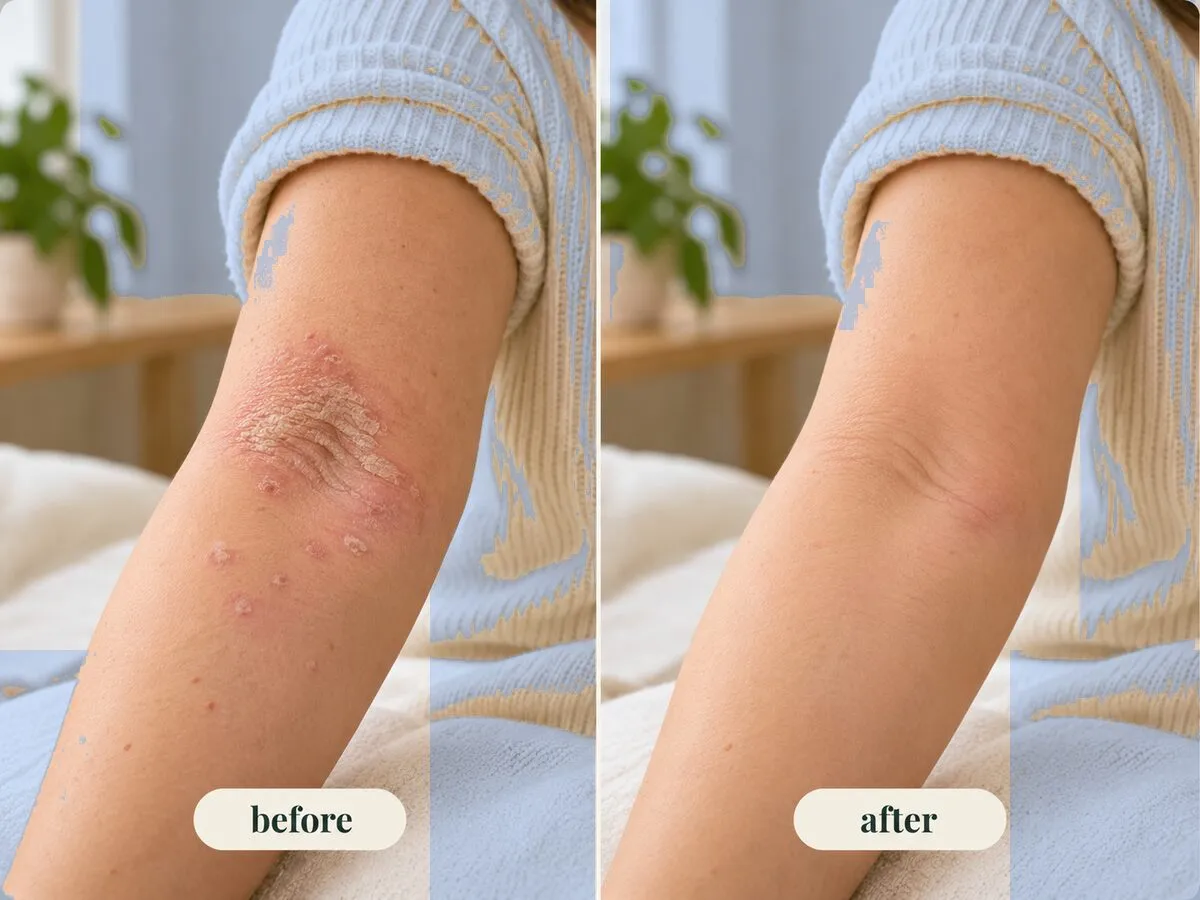
PATIENT STORIES
Psoriasis patient experiences.
Your consultation process
Know what to expect before you begin.
STEP 01
Schedule a discovery call
Choose a convenient time for a free conversation about your psoriasis history and whether our approach may be a fit.
STEP 02
Complete your intake
If you proceed with care, share your psoriasis history, prior treatments, photographs, symptoms, medications, and relevant records.
STEP 03
Review the full pattern
Your presentation is reviewed through Chinese Medicine dermatology and relevant modern clinical considerations.
STEP 04
Receive your direction
Together we discuss an individualized treatment direction and how progress may be monitored.
STEP 01
Reserve your appointment
Select the consultation, complete
payment, and choose an available time.
STEP 02
Complete your intake
Share your eczema history, treatments,
diet, medications, labs, symptoms, and
major concerns.
STEP 03
Review the full pattern
We examine your case through Chinese
Medicine and an integrative clinical
framework.
STEP 04
Receive your direction
You leave with an explanation of the
likely pattern and the most appropriate
next steps.

YOUR PRACTITIONER
Seth Drake, L.Ac., MSOM
Licensed Acupuncturist
18+ Yrs Experience
Board Certified
Chinese Herbal Medicine
Integrative Dermatology
Chinese Medical Dermatology
Functional Medicine Dermatology
Seth Drake has more than 18 years of experience in Classical Nei Jing Style Acupuncture and Chinese Medical Dermatology. His clinical work brings together Traditional Chinese Medical Dermatology, Chinese herbal dermatology, nutrition, functional testing, and individualized lifestyle guidance.
His practice is built for patients with chronic, inflammatory, autoimmune, dermatological, and difficult-to-resolve conditions who need a broader, more organized clinical approach.
“The goal is not simply to suppress symptoms. It is to understand the pattern well enough to help the body move toward greater stability.”
FREQUENTLY ASKED QUESTIONS
FAQs about psoriasis care.
Understanding what to expect helps you make a confident decision about your care.
Can Chinese Medicine be used for psoriasis?
Chinese Medicine dermatology offers an individualized approach using herbal formulas and other supportive strategies. Evidence for specific herbal treatments varies, and outcomes cannot be guaranteed. Care may complement conventional dermatology management.
What Chinese Medicine patterns are associated with psoriasis?
Traditional patterns commonly considered include Blood Heat, Blood Dryness, Blood Stasis, and Damp-Heat. Pattern identification depends on lesion appearance, symptoms, tongue and pulse findings, and the broader history.
Will I need to stop my current psoriasis medication?
No medication changes are required to explore our approach. Decisions about prescribed treatments, including biologics or topical medications, should be made with the prescribing clinician.
How long does psoriasis treatment take?
Psoriasis is a chronic condition and timelines vary with subtype, severity, history, and response. We assess changes over time rather than promising a fixed clearance date.
Do you treat scalp, inverse, and guttate psoriasis?
Yes. These presentations can be discussed during a discovery call. We review the diagnosis and individual history to determine whether our services are appropriate.
What happens during the discovery call?
You can describe your psoriasis, prior treatments, and goals. We explain our clinical approach and discuss whether a full consultation makes sense for your case.
TAKE THE NEXT STEP
Let’s talk about your psoriasis. Not sell you another quick fix.
Tell us about your psoriasis, what you have already tried, what is happening now, and what you hope will change. We will explain how Chinese Medical Dermatology approaches cases like yours and discuss whether working together makes sense. This conversation is not a commitment to treatment.
A conversation about your skin history
An introduction to our clinical approach
An opportunity to discuss whether we are a fit
You know your psoriasis.
Let’s explore a different
way to approach
your case.
Start with a conversation.
If you have tried multiple approaches without the consistency you want, start
with a conversation about your history, your goals, and what individualized care
could involve.
Rocky Mountain TCM
Classical Chinese medicine for the treatment and management of chronic and resistant inflammatory conditions. Integrating Traditional Chinese Medicine, acupuncture, Chinese herbal medicine, and evidence-informed functional medicine.
Explore
Home
About the Clinic
Conditions
Acupuncture
Siddha Varma Therapy
Testimonials
Contact
DERMATOLOGY
Eczema
Psoriasis
Rosacea
Perioral Dermatitis
Functional Medicine
Cystic Acne
Rheumatoid Arthritis
CLINIC INFORMATION
@2026 Rocky Mountain TCM | All rights reserved.
Privacy Policy | Terms of Use